
Which works better for promotion, YouTube Shorts or Instagram Reels, depends on what you need from a view. Shorts reach strangers through search and the feed. Reels bring people to your profile, and Instagram pays per view only by invitation.
Both apps tightened the rules on reposts this year. On April 30, Instagram stopped recommending accounts that mostly repost other people's photos and carousels, a rule it already applied to Reels. On October 1, YouTube started cutting the reach of Shorts re-uploaded from other creators. Your own video on both apps is fine. To compare them, I'd count followers and subscribers per video, because since August 24, YouTube counts a view from the first frame of any video.
Key takeaways
- YouTube and Instagram both count a view each time a video starts to play, so views alone don't show who wanted more. Subscribers gained per Short and Follows per Reel do.
- YouTube pays Partner Program channels 45% of their share of the Shorts Creator Pool. It has announced that from February 1, 2027, new channels will need 1,000 subscribers plus 20 million qualified Shorts views in 90 days or 8,000 watch hours to join.
- Instagram doesn't pay most creators for Reels views. Its Reels bonus is invite-only in Japan, South Korea and the US and requires 5 million views over three months.
- Both apps cut the reach of reposted content in 2026. Instagram extended its rule from Reels to photos and carousels on April 30, and YouTube started limiting re-uploaded Shorts on October 1.
- A Short can send viewers to one of your long videos through its related video link. A Reel sends them to your Instagram profile, where they can follow or message you.
YouTube Shorts vs Instagram Reels at a Glance
On both apps you swipe through vertical videos. What differs is where new viewers come from, what counts as a view and who pays for it.
Sources: YouTube Help — Upload YouTube Shorts; YouTube Help — YouTube Shorts monetization policies; YouTube — An update to how we count public views; YouTube — Prioritizing original content on Shorts; Instagram Help — View insights on your Instagram reels; Instagram Help — Recommendations on Instagram; Instagram Help — About Instagram's bonus program rules; Instagram for Creators — Finding success on reels in 2025; TechCrunch — Instagram cracks down on content aggregators; Social Media Today — Adam Mosseri on Instagram ranking signals. Checked November 2026.
The reach numbers use different units. YouTube says Shorts average 200 billion daily views, while Meta counts 3 billion monthly users on all of Instagram, Reels included. Neither tells you which app will grow your account, so I'd look at what a view turns into.
Pain Point #1: Viral Views That Don't Turn Into Followers
The complaint is the same on both apps. A video takes off, and the follower count barely moves.
A Shorts View and a Reels View Are Counted the Same Way
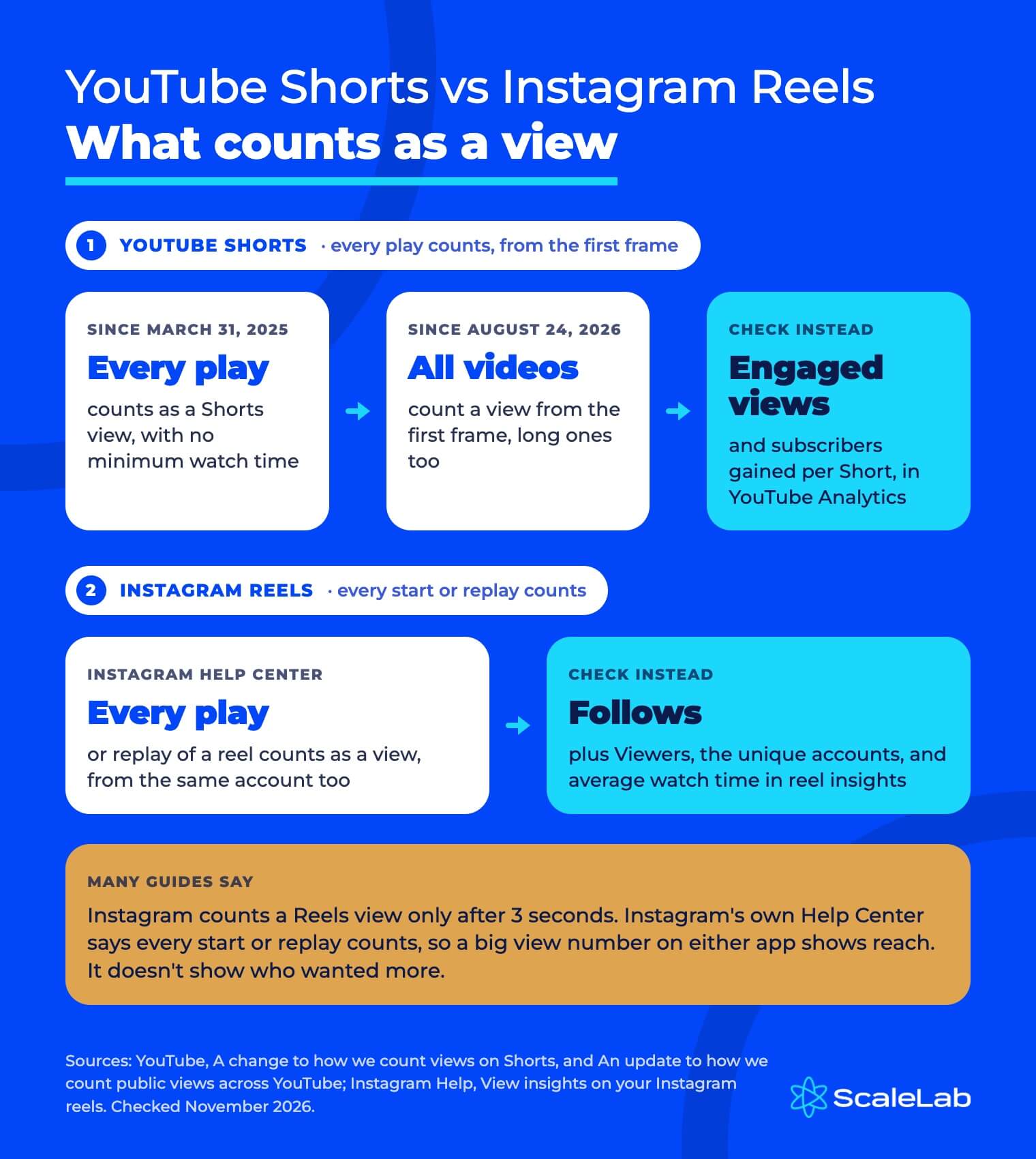
Many guides say Instagram counts a Reels view only after 3 seconds. Instagram's Help Center says a view is counted every time a Reel starts to play or replay. YouTube moved Shorts to the same rule in March 2025 and every other format on August 24, 2026.
So a big number shows reach. It doesn't show who wanted more. For viewers who chose to keep watching, open Engaged views in YouTube Analytics. On Instagram, Viewers counts unique accounts, and average watch time shows how long they stayed.
On YouTube Shorts
In the Shorts feed, the next video starts before anyone thinks about your channel. A related video fixes part of that, because it puts a link to one of your long videos or Shorts right in the player. Series do the rest. Numbered parts give people a reason to subscribe for the next one.
One channel AIR Media-Tech works with, about clay sculpting and resin art, started posting Shorts in September 2025 after its long videos stalled. In 30 days, its views grew 41.8% and revenue 64.1%. The Shorts brought new people to the channel, and they kept watching the long videos.
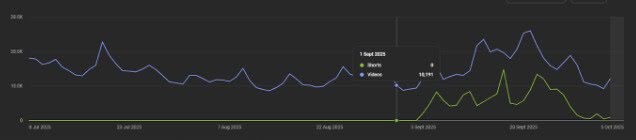
Whether Shorts help a long-form channel depends on the niche. AIR Media-Tech, the group ScaleLab is part of, compared 18,000 English-language channels from March 2025 to March 2026. Channels that mixed Shorts into their long videos had up to 41% more subscribers in Health & Fitness, and they also led in Business and Education. Long-form-only channels led in Gaming, Beauty and Science & Tech. The 1,247 channels that changed their Shorts share by 30 points or more in the second half of 2025 trailed both groups in every niche, so I'd add Shorts gradually.
Your Shorts get views but no subscribers?
Send us your channel. We'll find which Shorts bring subscribers and which long videos they should lead to, and give you a plan for your next Shorts.
On Instagram Reels
On Instagram, a Reel that lands sends people to your profile, so the profile has to say in one line what you post. Instagram head Adam Mosseri named watch time, likes and sends as the top three ranking signals, with sends counting a little more for reaching people who don't follow you yet. So I'd make Reels people want to forward to a friend.
Trial Reels help with the test. They go only to people who don't follow you, and you decide afterward whether your followers see them.
After each Short, check
- Subscribers gained, in the Short's analytics in YouTube Studio
- Engaged views, in YouTube Analytics Advanced Mode
- Whether the Short has a related video, and which one
After each Reel, check
- Follows, in the Reel's insights
- Average watch time
- Shares, since sends help a Reel reach people who don't follow you
Sources: YouTube Help — Add a related video to your YouTube Shorts; YouTube — An update to how we count public views; Instagram Help — View insights on your Instagram reels; Social Media Today — Adam Mosseri on Instagram ranking signals. Checked November 2026.
Pain Point #2: Instagram Reels vs YouTube Shorts Monetization
YouTube shares Shorts ad revenue with partner channels. On Instagram, the money comes from fans and brands.
YouTube Shorts Pay Through the Partner Program
Shorts earn from ads once a channel joins the YouTube Partner Program. YouTube pools the ad revenue from the Shorts feed, and monetizing creators keep 45% of their share.
To join today
10M
qualified Shorts views in 90 days, or 4,000 watch hours in 12 months, plus 1,000 subscribers
From February 1, 2027
20M
qualified Shorts views in 90 days for new channels, or 8,000 watch hours in 365 days. Earning from the Creator Pool will take 10M views every 90 days
Sources: YouTube Help — YouTube Partner Program overview & eligibility; YouTube Help — Changes to the YouTube Partner Program. Checked November 2026.
The 2027 changes don't affect channels already in the program, as long as they accept the updated terms in YouTube Studio by January 31, 2027. Missing the Creator Pool threshold in a month doesn't remove a channel from the program or touch its long-form earnings.
Per view, Shorts pay little. AIR Media-Tech's study of 274 channels found that Shorts earn 3–14% of what long videos earn per 1,000 views, with a typical niche at $0.07–$0.20 per 1,000 engaged views. So I'd count on the long videos a Short leads to. Rates by niche and country are in how much YouTube pays for Shorts.
Instagram Pays Most Creators Nothing Per View
Instagram ended the Reels Play Bonus in March 2023, and nothing open to everyone replaced it. Most creators earn there from fans and brands. Here's who can use each tool.
Sources: Instagram Help — About Instagram's bonus program rules; Instagram Help — How to earn money on Instagram Gifts; Instagram Help — Eligibility requirements for Instagram Subscriptions; Facebook for Creators — Breakthrough bonus program; Instagram Help — Eligibility requirements for creators on Meta Creator Marketplace. Checked November 2026.
If your country isn't on a list, the tool won't appear in your Professional dashboard. Pakistan, for one, isn't on the Gifts or Subscriptions list yet.
Brand Deals Work on Both Apps
Brands pay on both apps, and both now help them find you. YouTube Creator Partnerships, the program formerly called BrandConnect, sits in YouTube Studio for Partner Program channels in 24 countries, and its requirements don't change in February 2027. On Instagram, Meta Creator Marketplace does the same job.
If you sell to brands on both platforms, keep one rate card. pin.top puts your stats, packages and prices from Instagram, YouTube and other platforms on one link from 1,000 followers, and brands pay upfront. Per-view pay and brand rates for Shorts, TikTok and Reels are in AIR Media-Tech's creator earnings breakdown.
Pain Point #3: Shorts and Reels Algorithms Keep Changing
Both apps changed how they count and recommend short videos several times since January 2025. These are the changes each company announced itself.
1
January 21, 2025 · Instagram. Reels up to 3 minutes can be recommended to people who don't follow you, starting with US creators. The limit used to be 90 seconds.
2
March 31, 2025 · YouTube. A Shorts view counts every time a Short starts to play or replay. YouTube said the change helps creators compare reach across platforms. Earnings and Partner Program eligibility still use engaged views.
3
December 10, 2025 · Instagram. Your Algorithm lets viewers see and edit the topics behind their Reels recommendations.
4
April 30, 2026 · Instagram. Accounts that mostly repost other people's content stop being recommended. Adding a watermark or changing a video's speed doesn't make it original.
5
August 24, 2026 · YouTube. Every format counts a view from the first frame, not only Shorts.
6
October 1, 2026 · YouTube. Shorts recommendations favor original content and cut the reach of videos re-uploaded from other creators.
7
October 26, 2026 · Instagram. Instagram starts testing Features, horizontal videos up to 90 minutes, with select creators in Brazil and the US.
Sources: Instagram for Creators — Finding success on reels in 2025; YouTube — A change to how we count views on Shorts; TechCrunch — Instagram's new Your Algorithm tool; TechCrunch — Instagram cracks down on content aggregators; YouTube — An update to how we count public views; YouTube — Prioritizing original content on Shorts; The National — Why Instagram is adding long-form videos. Checked November 2026.
Most of these changes point the same way. Both apps now count every play and push videos people made themselves, so reposts lose reach and a big view count means less than it used to. I'd post only what you shot yourself or edited into something new, and judge each video by the followers and subscribers it brings.
Posting your own videos to both apps also means one rule change can't wipe out all your reach. The Features test shows the two apps moving toward each other, Instagram toward long videos and YouTube toward Shorts, so I'd plan around what your audience watches and expect each app's rules to change again.
Posting the Same Video to Shorts and Reels Without Losing Reach
You can post your own video to both apps. Both 2026 rules are about reposting other people's work, and neither one targets a creator who posts their own video on both apps.
Many guides say both apps bury any video with a watermark. Instagram's April rule says a watermark doesn't make someone else's video original. YouTube's October 1 post doesn't mention watermarks at all. I'd still export a clean file without another app's logo, because it costs nothing.
Three things to change before the second upload.
- Length. Both apps take videos up to 3 minutes. On YouTube, a Short over one minute with an active Content ID claim is blocked worldwide, so keep anything with licensed music under a minute.
- Music. Add sound inside each app instead of exporting it with the video. A track from Instagram's library can bring a Content ID claim on YouTube.
- Captions. Write the Short's title the way people search for the topic. On Instagram, the caption can give a reason to follow.
A full workflow for cutting one video for several apps is in repurposing content for Shorts, Reels and TikTok. The one-video test from YouTube Shorts vs TikTok works the same way with Reels.
So, Which Is Better for Promotion?
It depends on what you need from a view, so here's how I'd split it by goal.
- Reach from zero. Shorts, because they show up in YouTube search as well as the Shorts feed.
- Followers who know you. Reels. A Reel sends viewers to your profile and DMs, and Follows in Reel insights shows which videos work.
- Ad revenue. Shorts, once the channel is in the YouTube Partner Program. Instagram pays for views only by invitation, in three countries.
- Brand deals. Both. Brands find creators through YouTube Creator Partnerships and Meta Creator Marketplace.
- A YouTube channel built on long videos. Shorts first, because the related video link sends viewers straight to a long video. Reels can bring a second audience, but they lead to your Instagram profile first.
Plenty of big creators post on both apps, and the three below have a bigger audience on YouTube. That fits the funnel above, since a Short can lead viewers to long videos on the same channel.
Source: the creators' YouTube channels and Instagram profiles. Checked November 18, 2026.
So I wouldn't pick one app for good. I'd start where your goal points, post your own videos to both, and move effort toward whichever app brings more followers or subscribers per video after a month.
Want your short videos to grow the channel?
We'll go through your Shorts and long videos, find what turns viewers into subscribers, and give you a plan for the YouTube side of your short-form work.
ScaleLab is a force multiplier for creators, designed to help them scale their digital presence. We are a US-based company and part of AIR Media-Tech, a leading global creator ecosystem. With a suite of 30+ tools and a team of experts, we help creators grow their income, increase engagement, and protect their content through growth strategies, AI-powered content management, global localization, financial flexibility, brand-deal enablement, distribution, live streaming, and channel safety services. ScaleLab is a YouTube Certified Partner.


